
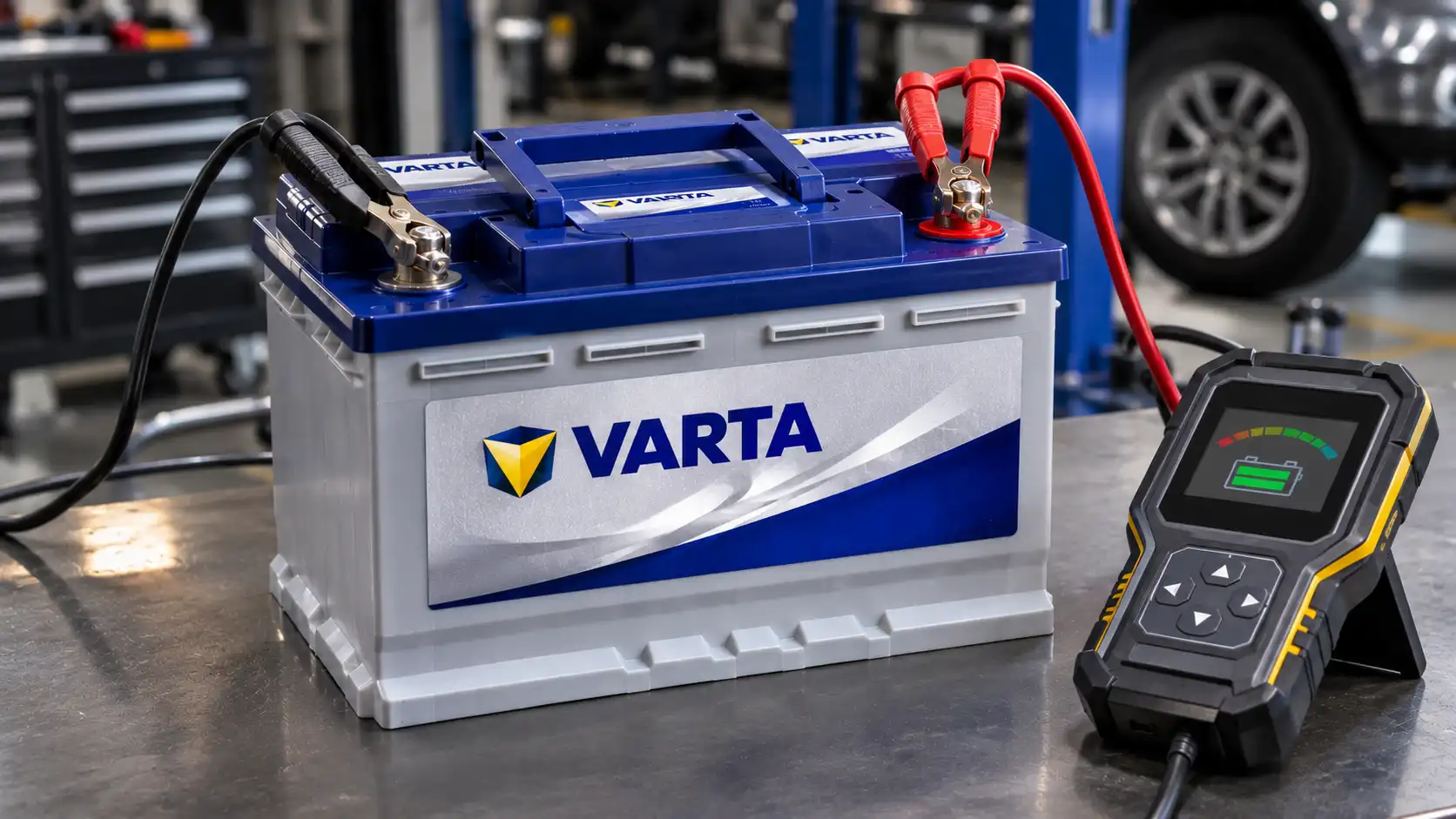
A car battery needs enough power to start the engine, especially when the engine is cold. Choosing a battery with the wrong starting power can lead to slow cranking, starting trouble, and poor performance.
Cold Cranking Amps (CCA) measure how much current a battery can deliver during a cold-start test. Varta batteries come with different CCA ratings to meet the needs of small cars, large sedans, diesel SUVs, and other vehicles.
Ratings such as 450A, 600A, and 800A indicate different levels of starting power. Understanding these numbers helps you select a battery that matches your engine and the manufacturer’s requirements.
What Does CCA Mean on a Varta Battery?
CCA stands for Cold Cranking Amps. It measures a battery’s ability to deliver electrical current for 30 seconds at 0°F (-18°C) while maintaining a voltage of at least 7.2 volts for a standard 12V battery under the specified test conditions.
This rating shows how well a battery can supply power to the starter motor in cold weather. A higher CCA number generally means the battery can deliver more starting current. However, it does not measure the battery’s total energy storage capacity. That is measured in Amp-hours (Ah). Both ratings are important when selecting a replacement battery.
What Do Different Varta Battery CCA Ratings Mean?
Varta offers batteries with different starting power levels because not every engine needs the same amount of current. A small petrol car usually needs less starting power than a large diesel SUV. The correct rating depends on engine size, fuel type, vehicle design, and the original battery specification.
Here is a general guide to common CCA ranges:
450 to 550 CCA: Small and Compact Cars
Batteries in the 450 to 550 CCA range are commonly suitable for smaller petrol engines and compact passenger cars. These engines generally need less power to turn the starter motor compared with large diesel engines.
Some Toyota Corolla and similar compact car configurations may use batteries within this range. However, the required rating can change according to the engine and model year. A higher rating is not always necessary if the original battery specification calls for a lower one. Always check the recommended CCA before purchasing.
550 to 650 CCA: Medium-Sized Sedans
The 550 to 650 CCA range is commonly found in batteries designed for medium-sized sedans and some larger petrol cars. These vehicles may have bigger engines and more electrical equipment than compact models.
Cars with features such as power seats, advanced infotainment systems, and electronic safety systems may have different battery requirements. However, these features do not automatically mean a higher CCA battery is needed. The starter motor and engine specifications remain the main factors when choosing starting power.
700 to 850 CCA: Large SUVs and Diesel Engines
Batteries rated between 700 and 850 CCA are commonly used in vehicles with larger engines and higher starting power needs. Large diesel engines often require more current because of their higher compression ratios.
Certain Toyota Land Cruiser and Ford Ranger configurations may need batteries within this range. These batteries can provide strong current to turn the engine during starting. However, the correct battery must still match the vehicle’s voltage, capacity, size, terminal layout, and battery technology.
Above 850 CCA: High-Demand Vehicles
Some large SUVs, powerful diesel vehicles, and heavy-duty applications require batteries with CCA ratings above 850A. These engines may need greater starting current, particularly when fitted with additional electrical equipment or designed for demanding conditions.
Varta offers different battery models to meet various vehicle requirements. However, choosing the highest available CCA rating is not the right approach. The battery must fit the vehicle’s electrical system and meet its original specifications.
Why Does CCA Matter for Your Car?
CCA plays an important role in engine starting. The battery supplies electricity to the starter motor, which turns the engine until combustion begins. If the battery cannot provide enough current, the engine may crank slowly or fail to start.
Several factors affect how much starting power a vehicle needs.
1. Engine Size
Larger engines generally need more power to start than smaller ones. A large V8 petrol engine or diesel engine may require a higher CCA rating than a compact four-cylinder petrol engine.
This happens because larger engines have more internal parts to move during cranking. Diesel engines also use higher compression, which increases the effort needed to turn them over. This is why a battery suitable for a small sedan may not be suitable for a large SUV.
2. Weather Conditions
Cold weather affects both the engine and the battery. Engine oil becomes thicker at low temperatures, increasing the resistance faced by moving engine parts. At the same time, the battery’s chemical reactions slow down, reducing its ability to supply current.
A battery with a suitable CCA rating helps provide enough power under these conditions. This is especially important for drivers who regularly park their cars outdoors in freezing regions.
In hot regions such as the UAE, cold starts are less common. However, CCA remains an important specification because the battery must still provide enough current to start the engine reliably.
3. Battery Age and Condition
A new battery generally delivers better starting performance than an old or damaged one. As a battery ages, its internal plates can wear down, reducing its ability to supply the required current.
For example, a battery originally rated at 700 CCA may no longer deliver the same starting power after several years of use. This can cause slow cranking or starting problems. Regular battery testing helps identify a drop in performance before the battery fails completely.
What Is the Difference Between CCA and Ah?
CCA and Ah are two different battery ratings. Both are important, but they measure different things.
- CCA (Cold Cranking Amps): Measures the battery’s ability to deliver high current for engine starting under cold test conditions.
- Ah (Amp-hours): Measures the battery’s capacity to supply a certain amount of current over a set period under specified test conditions.
For example, a 12V 77Ah battery with 780 CCA has a 77Ah capacity and a 780A cold-start rating. The first number describes its energy storage capacity, while the second shows its starting power under the CCA test.
A battery with higher Ah does not always have higher CCA. Similarly, a high CCA rating does not automatically mean the battery has a larger energy reserve.
Understanding EN and SAE CCA Standards
When comparing Varta batteries, you may notice that their labels show CCA ratings based on different testing standards. Two common standards are European Norm (EN) and the Society of Automotive Engineers (SAE).
Both standards measure starting performance, but their testing methods and conditions are not exactly the same. As a result, a battery tested under EN may show a different CCA number from the same battery tested under SAE.
European Norm (EN)
EN is a common testing standard used for European car batteries. It follows a defined test process to measure how well a battery supplies current during cold starting.
Many Varta batteries sold in European markets display their starting power using EN ratings. When checking a replacement battery, compare its EN rating with the original battery if that is the standard listed by the vehicle manufacturer.
Society of Automotive Engineers (SAE)
SAE is another standard used to measure battery starting performance. It is commonly found on batteries in North American markets.
Although EN and SAE both measure cold-start performance, their test procedures differ. Therefore, you should not directly compare the numbers without checking which standard was used. Always use the vehicle manufacturer’s recommended standard when selecting a replacement.
Does a Higher CCA Rating Always Mean a Better Battery?
A higher CCA rating can provide more starting current, but it does not automatically make a battery better for every car. The vehicle’s electrical system is designed to work with specific battery requirements.
For example, a compact petrol car may not need an 850 CCA battery if its manufacturer recommends a lower rating. Installing a much higher-rated battery may offer no useful improvement if the battery is not correctly matched in other areas.
Before selecting a Varta battery, check these details:
- Recommended CCA rating
- Battery voltage
- Amp-hour capacity
- Physical dimensions
- Positive and negative terminal positions
- Battery technology, such as AGM, EFB, or standard flooded
- Hold-down and terminal connection types
The goal is to choose a battery that meets or exceeds the manufacturer’s required starting power while matching all other fitment requirements.
How Do AGM and EFB Batteries Affect CCA Ratings?
CCA is not the only specification that matters when choosing a Varta battery. Its internal technology also plays an important role, especially in modern cars with Start-Stop systems.
AGM Batteries
Absorbent Glass Mat (AGM) batteries use a special glass fibre material to hold the battery’s electrolyte. This design supports higher power demands and repeated charging and discharging.
AGM batteries are commonly used in luxury cars and vehicles with advanced Start-Stop systems or regenerative braking. Some BMW and Audi models require this technology because their electrical systems are designed around AGM battery performance.
EFB Batteries
Enhanced Flooded Battery (EFB) technology is designed to handle more charge and discharge cycles than a standard flooded battery. It is commonly used in vehicles with basic Start-Stop systems.
An EFB battery offers better cycle performance than a conventional starter battery. However, it is not always a suitable replacement for an AGM battery. Always follow the original battery specification when changing battery technology.
How to Choose the Right Varta Battery CCA Rating
Selecting the correct battery requires more than looking at the CCA number. You should check the vehicle’s original battery details and confirm that the replacement matches its electrical and physical requirements.
Follow these steps before buying:
- Check the existing battery: Look for its CCA, Ah, voltage, and technology on the label.
- Confirm the vehicle details: Check the make, model, manufacturing year, and engine type.
- Match the CCA rating: Choose a battery that meets the manufacturer’s minimum starting power.
- Check battery dimensions: Make sure the new battery fits securely in the tray.
- Confirm battery technology: Check whether your car needs a standard, AGM, or EFB battery.
- Check terminal positions: Make sure the positive and negative terminals match the vehicle connections.
You can use the Varta Battery Finder to check suitable battery options for your vehicle. A professional battery test can also help confirm whether your existing battery needs replacement.
Signs That Your Car Battery Is Losing Starting Power
A battery may show signs of weakness before it stops working completely. A drop in available starting current can make it harder for the starter motor to turn the engine.
Common warning signs include:
- Slow engine cranking when starting the car.
- Clicking sounds when turning the ignition.
- Dim headlights during engine starting.
- Battery warning lights on the dashboard.
- Frequent need for jump-starting.
- Electrical features working less reliably.
These symptoms can also result from a faulty alternator, damaged wiring, or a weak starter motor. A battery load test or conductance test can help check its actual condition and available starting power.
Conclusion
Varta battery CCA ratings show how much starting current a battery can deliver under cold test conditions. Smaller petrol cars may use batteries rated around 450 to 550 CCA, while larger SUVs and diesel engines may need 700 to 850 CCA or more. However, the correct rating depends on the vehicle manufacturer’s specifications.
When choosing a replacement, check the CCA, Ah capacity, battery size, and technology. If you are unsure which Varta battery is right for your car, contact Varta Battery Dubai. Our team can test your existing battery, check your vehicle’s requirements, and help you choose a suitable replacement for reliable starting performance.