
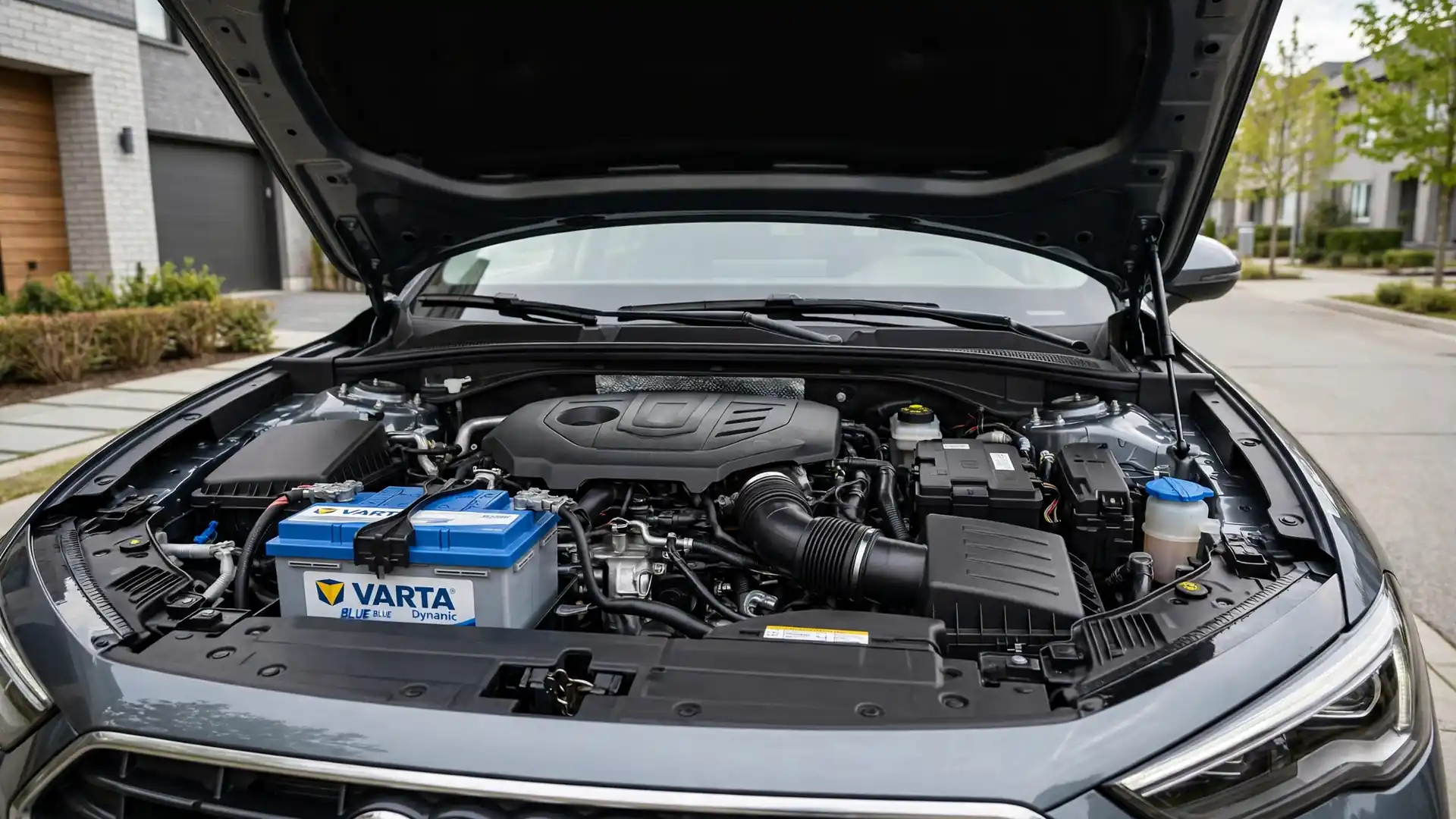
Do you mainly use your car for quick trips to work, nearby shops, or school? Your car may start without any trouble today, but these short drives can slowly weaken its battery.
Yes, frequent short-distance driving can affect Varta battery performance because the battery may not get enough time to recharge after starting the engine. Each start uses electrical energy, while the alternator needs time to replace it.
When your trips are too short, the battery can lose more charge than it gains. Over time, this may lead to slow engine starting, low battery power, or a car that will not start at all. Regular battery checks, good charging habits, and the correct battery type can help reduce these problems.
8 Ways Short-Distance Driving Affects Varta Battery Performance
1. Why Do Short Trips Drain a Car Battery?
Starting your car uses a large amount of electrical energy for a short period. Once the engine runs, the alternator supplies power to the car’s electrical systems and recharges the battery.
However, a five-minute drive may not give the alternator enough time to replace all the energy used during starting. If you repeat this pattern several times each day, the battery may slowly lose charge.
According to Varta’s battery guidance, frequent short journeys can create an unbalanced charging cycle, especially when the battery is old or already weak.
2. How Does the Alternator Recharge the Battery?
The alternator is a key part of your car’s charging system. It produces electrical power while the engine runs and sends some of that power to the battery. However, the alternator must also supply other parts, including the lights, air conditioning controls, infotainment system, and other electrical equipment.
This means not all available power goes toward charging the battery. During a short trip, the charging time may be too limited to replace the energy used during starting. If the battery repeatedly stays below a healthy charge level, its performance can decline over time.
3. What Are the Signs of a Weak Varta Battery?
A battery that does not receive enough charge may show warning signs before it fails. You might notice that the engine turns over more slowly than usual when you press the start button or turn the key.
Interior lights may appear weaker, or the dashboard may display a battery warning. Some cars may also show electrical system messages or have trouble with automatic start-stop functions.
These symptoms do not always mean the battery is faulty. A weak alternator, loose connection, or damaged cable can cause similar problems, so a proper battery and charging system test is important.
4. Why Do Frequent Engine Starts Put More Strain on the Battery?
Every time you start your car, the battery sends a strong current to the starter motor. The engine usually starts within seconds, but the battery must then recover the energy it used.
If you make several short trips in one day, you may start the engine many times without giving the battery enough time to recharge. Cars with start-stop technology can place extra demands on the battery because the engine may switch off and restart during traffic.
Batteries designed for these systems, such as the correct AGM or EFB type, are built to handle repeated starting more effectively.
5. How Does Dubai’s Heat Affect Battery Performance?
High temperatures in Dubai can speed up the chemical reactions inside a car battery and increase wear over time. Heat can also increase self-discharge and damage internal parts, depending on the battery design and condition.
When you combine hot weather with frequent short trips, the battery may face both heat-related wear and an ongoing lack of charge. A battery that seems fine during one journey may struggle after several days of repeated short drives.
Check its condition regularly, keep the terminals clean, and have the charging system tested if you notice slow starting or repeated low-charge warnings.
6. Can Air Conditioning and Other Electrical Systems Make the Problem Worse?
Yes, electrical equipment can reduce the power available to recharge the battery during short journeys. In Dubai, drivers often use air conditioning on nearly every trip.
The vehicle’s blower, lights, audio system, phone chargers, and other electrical parts can add to the load on the charging system.
The exact effect depends on the car’s design and the power used by each system. You should never switch off safety-related equipment to save battery power.
However, you can avoid leaving unnecessary accessories running when the engine is off and make sure the battery is properly charged.
7. Which Varta Battery Type Is Suitable for Frequent Short Trips?
The right Varta battery depends on your car’s original specifications, electrical needs, and driving habits. Standard batteries suit many cars without start-stop technology, while EFB and AGM batteries are designed for more demanding uses.
A 70Ah Varta battery may be suitable for a car that requires a 70 Ah battery or allows this capacity within its approved range. However, capacity alone does not determine whether a battery is right for your car.
Check the voltage, battery size, CCA rating, and required battery type before buying a replacement. Always follow the car maker’s recommendations.
8. How Can You Help Your Varta Battery Last Longer?
A few simple habits can help keep your battery in good condition. When practical, combine several short errands into one longer journey so the alternator has more time to replace the energy used during starting.
A longer drive can help, although it does not guarantee a full charge if the battery is weak or the charging system has a fault.
If you mainly drive short distances, ask a specialist whether an approved smart charger is suitable for your car and battery type. Regular testing can identify low charge or battery wear before you are left with a car that will not start.
How Often Should You Check Your Varta Car Battery?
If you mostly drive short distances, regular battery testing is especially useful. A battery test can measure its condition and starting ability, while a charging system test checks whether the alternator is supplying the correct charge. It is wise to have both checked if the engine starts slowly, the battery warning light appears, or the battery repeatedly loses charge.
Battery age, heat, driving habits, and electrical use all affect service life. Do not wait for the car to stop starting before arranging a check. If your battery needs frequent recharging, ask a technician to find the cause instead of replacing it without testing.
Conclusion
Frequent short-distance driving can reduce Varta battery performance because the battery may use more energy starting the engine than it gains during each trip. Repeated undercharging can weaken the battery over time, while Dubai’s heat can speed up battery ageing. Slow engine cranking, dashboard warnings, and repeated starting problems are signs that your battery may need attention.
You can reduce the risk by combining errands when practical, checking the battery regularly, and using the correct battery type for your car. If the battery keeps losing charge, have the alternator and electrical system tested rather than assuming the battery is the only problem.
For professional help, contact Varta Battery Dubai for car battery testing, charging system checks, and battery replacement. A proper inspection can help you find the cause of battery problems and choose the right replacement for your driving needs.