Does your car need more power to start, especially during hot weather or after sitting unused for several days? You may be thinking about replacing your old battery with a higher-capacity model from Varta.
Yes, you can install a higher-capacity Varta battery in your car if it matches the car’s electrical system and fits the battery space. A battery with a higher amp-hour (Ah) rating can store more energy, while a higher cold cranking amps (CCA) rating can provide more starting power.
However, a bigger rating does not always mean a better choice. You must check the battery size, voltage, terminal layout, and charging system before upgrading. Choosing the correct battery helps protect your car’s electrical parts and supports reliable starting.
8 Things to Check Before Installing a Higher-Capacity Varta Battery
1. What Does Battery Capacity Mean?
Battery capacity shows how much electrical energy a battery can store and supply over time. It is usually measured in amp-hours (Ah). For example, a 70 Ah battery can store more energy than a 60 Ah battery under the same test conditions.
This extra capacity may help a car run its electrical systems for longer when the engine is off. However, the actual result depends on the car’s power use, battery condition, and temperature. A higher Ah rating does not automatically improve fuel use or engine performance.
2. Is a Higher Ah Rating Safe for Your Car?
A higher Ah rating can be safe when the car maker allows it and the battery meets the required specifications. For example, if your car accepts batteries within a range of 60 to 75 Ah, a suitable 70 Ah Varta battery may be an option.
However, you should not assume that every car can use a larger battery. Some modern cars have strict battery requirements because of their charging systems and electronic controls. Check the owner’s manual or ask a battery expert to confirm the approved capacity range before making a change.
3. Why Do CCA Ratings Matter?
Cold cranking amps (CCA) measure a battery’s ability to supply starting power under cold test conditions. A higher CCA rating can provide more starting power when the engine needs a strong current to turn over.
This rating is useful when comparing batteries for engines that need more power to start. In the UAE, hot weather is a major concern, but CCA still matters because it describes the battery’s starting ability.
If two batteries meet your car’s size, voltage, and other requirements, a higher suitable CCA rating can be helpful. Always follow the car maker’s minimum rating.
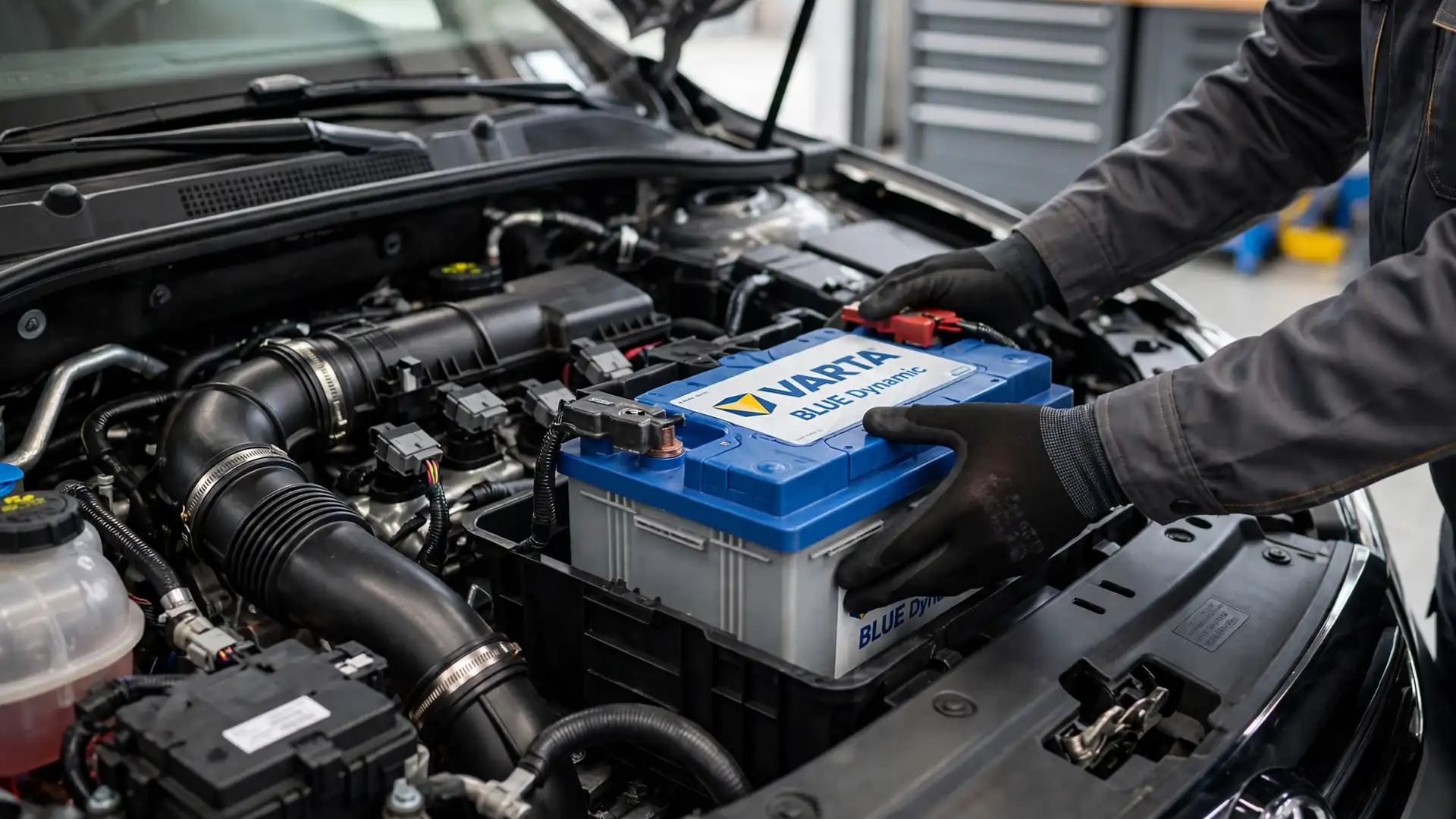
4. Will a Higher-Capacity Battery Fit in the Battery Tray?
Physical size is just as important as electrical capacity. A higher-capacity battery may be longer, wider, or taller than the original one. If it does not fit the battery tray, the hold-down bracket may not secure it properly.
A loose battery can move while driving, which may damage its case, terminals, or nearby parts. Check the battery’s length, width, height, terminal position, and mounting type before buying it. Make sure the bonnet can close safely and that the battery does not touch cables, metal parts, or other components.
5. Can Your Car’s Charging System Handle the Upgrade?
Your car’s alternator supplies electrical power and recharges the battery while the engine runs. A higher-capacity battery does not normally damage a suitable charging system simply because its Ah rating is higher.
However, a larger battery may need more time to recharge after a deep discharge. The alternator’s condition, driving habits, and electrical load all affect charging. Short trips may not provide enough time to replace the energy used during starting.
A battery check should include the alternator’s charging voltage and the condition of the charging system to help prevent repeated low-charge problems. You need to use the compatible Varta battery charger.
6. Does Your Car Need Battery Registration or Coding?
Some modern cars need a battery registration or coding procedure after a replacement. This is common in cars with a battery management system (BMS), which tracks battery condition and charging needs.
If you install a different battery capacity without updating the system when required, the car may charge it incorrectly or show battery warnings. Cars with start-stop technology may have extra battery requirements, including the correct AGM or EFB type.
Before upgrading, confirm whether your car needs a diagnostic scan, battery registration, or updated capacity settings. The exact process depends on the make and model.
7. Which Varta Battery Type Should You Choose?
Varta offers different battery ranges for different vehicle needs. The correct type depends on the car’s original battery and electrical features.
- Standard lead-acid batteries: Used in many cars with basic electrical needs.
- EFB batteries: Designed for certain cars with start-stop systems and more frequent starting.
- AGM batteries: Built for cars with higher electrical demands and many start-stop systems.
Do not replace an AGM battery with a standard battery just because the standard model has a higher Ah rating. The battery chemistry and design must suit the vehicle. Check the original battery label and your owner’s manual before selecting a replacement.
8. What Are the Risks of Choosing the Wrong Battery?
An unsuitable battery can lead to more than starting problems. Incorrect terminal positions may make the cables difficult to connect, while a poor fit can leave the battery unsecured. The wrong battery type may affect charging, start-stop operation, or battery life.
In some cases, the car may show warning lights or fail to start reliably. A higher capacity cannot fix problems caused by a weak alternator, damaged cables, or a faulty starter motor.
If your current battery keeps losing charge, test the full electrical system before spending money on a larger replacement.
How to Compare Your Current Battery With a Higher-Capacity Varta Model
Before buying a replacement, compare the details on your old battery with the specifications of the new one. This simple check can help you avoid choosing a model that does not suit your car.
Battery detail | What to check |
Voltage | It must match the car’s required voltage, usually 12V in passenger cars. |
Capacity (Ah) | Confirm the approved capacity range for your car. |
Starting power (CCA) | Meet or exceed the car maker’s minimum requirement. |
Battery type | Match the required standard, EFB, or AGM design. |
Size and terminals | Check the dimensions, terminal layout, and mounting points. |
Battery management | Confirm whether registration or coding is needed. |
For example, changing from a 60 Ah battery to a 70 Ah battery may work if the car supports that size and capacity. The numbers alone are not enough to confirm compatibility.
When Should You Upgrade to a Higher-Capacity Battery?
An upgrade may be worth considering if your car maker allows a higher capacity and your driving needs call for it. Cars with extra electrical equipment may need more stored energy, but any changes should follow the maker’s specifications. A suitable higher-capacity model may offer more reserve energy, though it cannot solve every electrical issue.
Consider an upgrade only after checking:
- The approved Ah range for your car.
- The minimum CCA requirement.
- The battery type and physical size.
- The condition of the alternator and starter motor.
- Any battery registration or coding needs.
If your car already has the correct battery, a larger model may offer little benefit. A proper battery test can help you decide whether you need a replacement or another repair.
Conclusion
You can install a higher-capacity Varta battery in your car, but only when the new battery meets the vehicle maker’s requirements. A higher Ah rating provides more energy storage, while a suitable CCA rating helps supply the power needed to start the engine. Battery size, voltage, terminal position, battery type, and charging system compatibility are just as important.
Before upgrading, check whether your car needs an AGM or EFB battery and whether battery registration is required. In Dubai, regular battery tests are useful because high heat can speed up battery wear. Do not choose a battery based on capacity alone.
For help choosing the right model, contact Varta Battery Dubai for battery testing, compatibility checks, and car battery replacement services. A professional check can help you find a suitable battery for your car and avoid problems caused by the wrong fit or specifications.